
LIsa Black
Cape Coral, FL
Female, 49


I spent the five happiest years of my life in a morgue. As a forensic scientist in the Cleveland coroner’s office I analyzed gunshot residue on hands and clothing, hairs, fibers, paint, glass, DNA, blood and many other forms of trace evidence, as well as crime scenes. Now I'm a certified latent print examiner and CSI for a police department in Florida. I also write a series of forensic suspense novels, turning the day job into fiction. My books have been translated into six languages.
I loved mystery shows and books when I was a kid. I always wanted to be a detective, but didn't want to be a cop. And I always liked science.
Share Answer: 

Most agencies do not have huge staffs like on TV, and people tend to stay in the field. Thanks to the TV shows there is a universe more competition than I faced. On the other hand thanks to the current emphasis on forensics, agencies are always expanding--the federal government will be setting mandates and providing grant money to expand labs and services Check out every level (city, county, state, federal) in your area that you can find and also private labs. Check the websites for the International Association for Identification and the American Academy of Forensic Sciences.
Share Answer: 
Where I live we have many burglaries. There really isn't a busiest time of year, though things sometimes pick up when the kids are out of school. When I worked at the coroner's office I also swore there were more homicides in September and December.
Share Answer: 
I would never want to discourage someone from this field because I love it. But it's a very popular field right now so I would also advise anyone to have a career plan B.
Share Answer: 
Firefighter
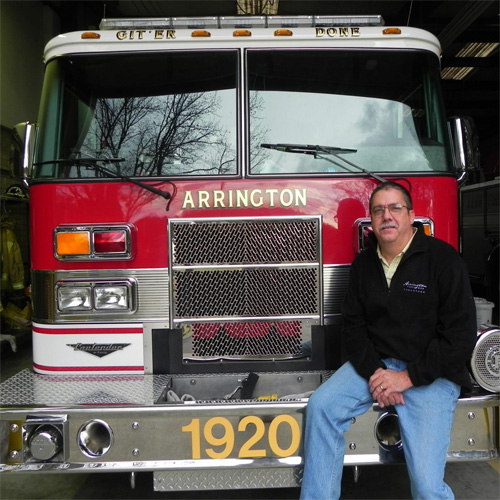 What's the worst you've been burned in a fire?
Obstetrician Gynecologist
 If a baby has health complications resulting from a difficult delivery, do you ever feel guilty?
Day Care Provider
 Is it ok w/your employer if you babysit one of the kids outside of daycare hours?
Yes, absolutely.
Share Answer: 
That's impossible to answer. Things can range from something like the Orlando shooting, which was massive to process but in terms of 'whodunit' it was over as soon as it began. Then you might have a person shot on the street, no casings, no witnesses--a very simple event, but nearly impossible to solve unless someone talks. Then there's every possible combination in between.
Share Answer: 
I'm not sure what you mean by 'specialize in homicide'. Forensic techniques can be utilized to investigate any crime, but if you mean you only want to work on homicides, then I don't know of any positions like that. The closest thing would be to work for an agency where the work is mostly homicides, such as a medical examiner's office. But even they would also investigate suicides, industrial accidents, etc.
Share Answer: 
-OR-
 Login with Facebook
 (max 20 characters - letters, numbers, and underscores only. Note that your username is private, and you have the option to choose an alias when asking questions or hosting a Q&A.)
(A valid e-mail address is required. Your e-mail will not be shared with anyone.)
(min 5 characters)
By checking this box, you acknowledge that you have read and agree to Jobstr.com’s Terms and Privacy Policy.
-OR-
Register with Facebook(Don't worry: you'll be able to choose an alias when asking questions or hosting a Q&A.)



 Browse Jobs
 Host a Q&A
 Search

 Submit Your Question
 Host a Q&A
 Last 7

