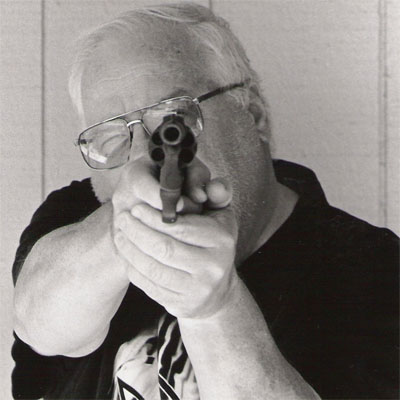
Bob Walsh
Stockton, CA
Male, 60

I worked for the California state system, starting as a Correctional Officer and retiring as a Lieutenant in 2005. I now write for the PacoVilla blog which is concerned with what could broadly be called The Correctional System.
It has been a LONG WHILE since I was there but the last time I was cadets were free to leave the academy after hours and on weekends. If the classes are large enough some trainees used to be housed off-grounds in motels but that was mostly advanced trainees, like basic supervisors academy and advanced training, not rookie officers.
Share Answer: 

In the California system, which is the only one I am truly familiar with, the ability to gain or not gain good time credit is a matter of law.
Share Answer: 
Sorry but no, I can't. I have been out of the system for 12 years now and I have zero information on it. I am GUESSING that it is a halfway-house type environment for prisoners who are nearly at their release date or who are in fact out on some form of supervised conditional release, but that is only an educated guess.
Share Answer: 
What happens next is that someone, usually a Lieutenant, holds a hearing on the administrative charge and determines what, if any, punishment will be applied.
Share Answer: 
Fashion Model
 Do you feel objectified when you're standing around in skimpy outfits?
CrossFit Coach
 Why is Crossfit so popular with women?
Certified Nurse Aide
 Is it uncomfortable having to help the elderly go to the bathroom and how did you get used to it?
A significant percentage of inmates are either totally illiterate or functionally illiterate. Possibly as much as 25%, certainly at least half that. Inmates manage to communicate between one another without that much difficulty, mostly verbally or even non-verbal "body language" communication. There is also a significant number of non-English speaking inmates in the system. The phrase "school to prison pipeline" generally refers to people dropping out of school and ending up in prison. There is also a "books not bars" undercurrent, at least in CA, that assumes (incorrectly) that making school more available to people will mean less people in prison. There is MANDATORY k-12 education in California and most other states as far as I know. You have to work REAL HARD to be kicked out of the system. You don't have to work that hard to stay in and at least TRY to get an education. In my experience most people in prison have CHOSEN to be there. They have deliberately adopted a criminal lifestyle for whatever reason. That reason does not, generally speaking, include lack of educational opportunity (IMHO). I admit it is something of a chicken and egg thing, but I believe that the criminal mindset and lifestyle pushes the education problem, not the other way around..
Share Answer: 
Call medical. Get injured inmate out of the cell and get medical attention. Do a detailed body search of both inmates. Check especially for damaged knuckles and defensive wounds. File appropriate report. Refer to supervisor for possible Ad Seg placement.
Share Answer: 
My first guess is that this is a lame joke. Assuming it is not. it will be removed unless it is somehow certified as a medical device. Have fun dude.
Share Answer: 
-OR-
 Login with Facebook
 (max 20 characters - letters, numbers, and underscores only. Note that your username is private, and you have the option to choose an alias when asking questions or hosting a Q&A.)
(A valid e-mail address is required. Your e-mail will not be shared with anyone.)
(min 5 characters)
By checking this box, you acknowledge that you have read and agree to Jobstr.com’s Terms and Privacy Policy.
-OR-
Register with Facebook(Don't worry: you'll be able to choose an alias when asking questions or hosting a Q&A.)



 Browse Jobs
 Host a Q&A
 Search

 Submit Your Question
 Host a Q&A
 Last 7

