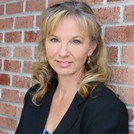
LIsa Black
Cape Coral, FL
Female, 49


I spent the five happiest years of my life in a morgue. As a forensic scientist in the Cleveland coroner’s office I analyzed gunshot residue on hands and clothing, hairs, fibers, paint, glass, DNA, blood and many other forms of trace evidence, as well as crime scenes. Now I'm a certified latent print examiner and CSI for a police department in Florida. I also write a series of forensic suspense novels, turning the day job into fiction. My books have been translated into six languages.
So far it hasn’t come up in my work, and we have lots of PPE (Personal Protective Equipment).
Share Answer: 

Generally about a 6 to 10% identified rate is good. Many prints that are collected at scenes by officers are ‘not of value for comparison ‘ (smudges or only have a few ridges) and many that are good belong to the victim or their friends, family, employees etc.
Share Answer: 
Sorry, the link just took me to the sign-in page.
Share Answer: 
I’m sorry but I don’t know what b.com is. The best way to know is to contact your local crime labs and ask them what their requirements are.
Best of luck.
Share Answer: 
Pharmacist
 Why is an advanced degree required to dole out pills at a pharmacy?
Rap Promoter / Manager
 Do rappers ever stage beefs with each other as a PR stunt?
CBP Officer
 What are the telltale signs you look to indicate someone's lying?
The requirements to work in a forensic capacity depend upon the agency--it might be anything from a high school diploma to a PhD for DNA analysis. The only way to know is to contact each agency and ask. Or at least check their websites, or the websites of forensic organizations such as IAI and AAFS, which post job vacancies. Drawbacks can be a lower salary than in the private sector, hours of work, having to work overtime or be on call. I don't know what you mean by 'self employ,' sorry. There are no 'freelance' type forensic positions that I know of, unless you have a specialty like soil analysis or anthropology, then you might be able to work doing consulting work when needed. But you'd have to have many years experience before that would be an option. I hope that helps! Best of luck!
Share Answer: 
I don’t know that game.
Share Answer: 
No, I've never regretted it. And your job title is whatever your agency says it is, so 'forensic scientist' and 'csi' can mean different things in different agencies, so you can certainly be both. the first implies you work mostly in the lab and the second implies you work mostly in the field, but depending on the size of the agency and any specialization you have, you might do both equally or they might be completely separate.
Share Answer: 
-OR-
 Login with Facebook
 (max 20 characters - letters, numbers, and underscores only. Note that your username is private, and you have the option to choose an alias when asking questions or hosting a Q&A.)
(A valid e-mail address is required. Your e-mail will not be shared with anyone.)
(min 5 characters)
By checking this box, you acknowledge that you have read and agree to Jobstr.com’s Terms and Privacy Policy.
-OR-
Register with Facebook(Don't worry: you'll be able to choose an alias when asking questions or hosting a Q&A.)



 Browse Jobs
 Host a Q&A
 Search

 Submit Your Question
 Host a Q&A
 Last 7

