
LIsa Black
Cape Coral, FL
Female, 49


I spent the five happiest years of my life in a morgue. As a forensic scientist in the Cleveland coroner’s office I analyzed gunshot residue on hands and clothing, hairs, fibers, paint, glass, DNA, blood and many other forms of trace evidence, as well as crime scenes. Now I'm a certified latent print examiner and CSI for a police department in Florida. I also write a series of forensic suspense novels, turning the day job into fiction. My books have been translated into six languages.
I actually haven’t seen that movie. Do you mean super bloody homicides or ones where some psycho has set up a torture chamber? (The answers would be yes to the former, no to the latter.)
Share Answer: 

Huh...that's a tough question. Nothing really stands out...everything is a little weird in some ways but not incredibly so. Perhaps the most unusual thing I ever had to examine was a safety harness from a window washer who fell 38 floors. Mostly I'm just amazed at the way people live, and the things people do to their houses. (And what they think looks good in terms of decor.)The most fun thing we had, at a homicide scene, was the homeless victim's cat with her litter of small kittens. That rivaled the litter of puppies who had a temporary bed in the master bath jacuzzi tub of a grow house.
Share Answer: 
Well, they need to be complete and accurate, but otherwise the actual English used can be pretty basic. Happily we’re not graded on our composition skills!
Share Answer: 
Oral and Maxillofacial Surgeon
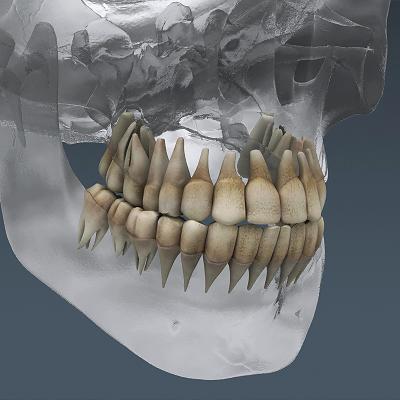 Do you ever operate on guys who get their jaws busted in a fight?
Personal Injury Lawyer
 What's the most frivolous case you’ve handled?
Bar Mitzvah DJ
 Why are DJ's so unwilling to accommodate song requests?
Contamination may make it impossible to get a DNA profile, or the profile might show a mixture. It will not cause a profile to look like someone else's DNA. Or it may have no effect at all. It depends what is contaminated with what.
Share Answer: 
I’m not a pathologist but I think it’s possible even if not likely. Bodies start to stiffen in 1-2 hours but rigor reaches its peak somewhere around 12 hours. It can depend a great deal on temperature, body type and medical conditions.
Share Answer: 
Sure, email me at lisa-black@live.com.
Share Answer: 
-OR-
 Login with Facebook
 (max 20 characters - letters, numbers, and underscores only. Note that your username is private, and you have the option to choose an alias when asking questions or hosting a Q&A.)
(A valid e-mail address is required. Your e-mail will not be shared with anyone.)
(min 5 characters)
By checking this box, you acknowledge that you have read and agree to Jobstr.com’s Terms and Privacy Policy.
-OR-
Register with Facebook(Don't worry: you'll be able to choose an alias when asking questions or hosting a Q&A.)



 Browse Jobs
 Host a Q&A
 Search

 Submit Your Question
 Host a Q&A

 Last 7

