
LIsa Black
Cape Coral, FL
Female, 49


I spent the five happiest years of my life in a morgue. As a forensic scientist in the Cleveland coroner’s office I analyzed gunshot residue on hands and clothing, hairs, fibers, paint, glass, DNA, blood and many other forms of trace evidence, as well as crime scenes. Now I'm a certified latent print examiner and CSI for a police department in Florida. I also write a series of forensic suspense novels, turning the day job into fiction. My books have been translated into six languages.
Wow, that's kind of hard, possibly because we in forensics don't 'solve' cases, the detective does. We provide them the information that hopefully solves or helps to solve the case. Some that took a surprisingly short time: we had a would-be rapist drop his wallet at the scene. I recently had a burglary/arson/car theft in which I had some decent fingerprints, but they didn't match anyone in our city database. The detective had no leads at all and no idea where the car was. Then as is routine I checked the prints against the neighboring city's database, and got a hit, they questioned the suspect and he confessed. In my small town we often have the killer waiting at the scene and telling us that they did it. However, after sitting in jail for a while they may decide they were justified, so the legal trial may not even begin until 2-3 years later. One that took longer: we had the brutal double murder of a woman and a young girl in 1989. Despite a copious investigation of every friend, acquaintance, fingerprint or hair involved, no leads. Then two years ago a man was arrested on a relatively minor charge and his DNA was searched and hit on the unsolved murder. Hope that helps!
Share Answer: 

As I’m not a toxicologist, I’m afraid I’d have no idea. Sorry!
Share Answer: 
I’m sorry but I have no idea. I’ve never worked in Toxicology.
Share Answer: 
I think it would certainly be an asset!
Best of luck.
Share Answer: 
"The Onion" Contributors
 What's your favorite Onion headline of all time?
Private Detective
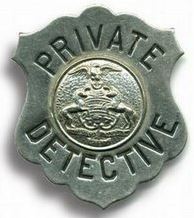 What's the best Sherlock-Holmes-worthy detective work you've ever done?
Hotel Front Desk Agent
 Have you ever had a suicide occur in one of your rooms?
Many forensic chemistry departments only analyze possible drugs, so I would think it would be possible to find.
Share Answer: 
I would try oblique lighting—try laying the piece down as flat as possible and then hold a flashlight to the side so the light beam travels across the piece instead of down onto it. Adjust the light to where it’s the most helpful. With the ziploc bag you might also put a piece of dark paper inside it to increase the constraint. That’s all I can think of since I’m not an expert in questioned documents. Best of luck!
Share Answer: 
That's a pretty broad question. I can tell you that for both seminal stains and blood stains, the best way to package one is to let it dry, then place in a sterile paper envelope or bag. Never plastic! Then keep in a dry, cool environment.
Hope that helps.
Share Answer: 
-OR-
 Login with Facebook
 (max 20 characters - letters, numbers, and underscores only. Note that your username is private, and you have the option to choose an alias when asking questions or hosting a Q&A.)
(A valid e-mail address is required. Your e-mail will not be shared with anyone.)
(min 5 characters)
By checking this box, you acknowledge that you have read and agree to Jobstr.com’s Terms and Privacy Policy.
-OR-
Register with Facebook(Don't worry: you'll be able to choose an alias when asking questions or hosting a Q&A.)



 Browse Jobs
 Host a Q&A
 Search

 Submit Your Question
 Host a Q&A
 Last 7

