
LIsa Black
Cape Coral, FL
Female, 49


I spent the five happiest years of my life in a morgue. As a forensic scientist in the Cleveland coroner’s office I analyzed gunshot residue on hands and clothing, hairs, fibers, paint, glass, DNA, blood and many other forms of trace evidence, as well as crime scenes. Now I'm a certified latent print examiner and CSI for a police department in Florida. I also write a series of forensic suspense novels, turning the day job into fiction. My books have been translated into six languages.
Sure, I'll email you.
Share Answer: 

Sorry for the delay, I’ve been on vacation. I guess it depends where the activity took place. If it all took place in bed and they washed the sheets, then there may not be any to find. An alternate light source can look for possible spots of semen, but the problem is many things can fluoresce, such as vaginal secretions, sweat, saliva, cleaners, certain fibers, etc.
Share Answer: 
I'm sorry but I've never worked in toxicology.
Share Answer: 
That’s hard to say. It depends not only on how old the stain is but how old or how sensitive the reagents are. I’ve had old known semen stains not react with relatively new reagents so it is possible.
Share Answer: 
Parcel Delivery Mailman
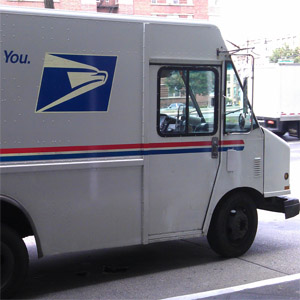 Are you a lot stronger and more fit because of your job?
Personal Stylist & Life Coach
 What's the difference between a life coach and a therapist?
Birthday Party Clown
 OK seriously, how DOES the clown car thing work?
I have absolutely no idea. I asked my coworker (who does digital forensics) this one time because I wanted to get rid of some old phones, but she didn't know either. I smashed them with a hammer and then soaked them in my pool for about ten minutes, but of course I have no way to know if that completely worked.
Share Answer: 
titles and job requirements aren't uniform, so the only way to know is to call the crime labs in your area or whereever you might be interested in working and ask them. At the coroner's office we had to have at least a bachelor's in a natural science (this was before they had forensic science majors). At the police department where I am now, they only require a high school diploma but you get more points in the interviewing process for having a four year degree, so we all have one. You can also go on the websites for professional organizations such as the American Academy of Forensic Sciences and check out their job vacancy postings and see what the various positions require. Good luck.
Share Answer: 
I apologize but I have absolutely no idea. I suspect there may not be a difference.
Share Answer: 
-OR-
 Login with Facebook
 (max 20 characters - letters, numbers, and underscores only. Note that your username is private, and you have the option to choose an alias when asking questions or hosting a Q&A.)
(A valid e-mail address is required. Your e-mail will not be shared with anyone.)
(min 5 characters)
By checking this box, you acknowledge that you have read and agree to Jobstr.com’s Terms and Privacy Policy.
-OR-
Register with Facebook(Don't worry: you'll be able to choose an alias when asking questions or hosting a Q&A.)



 Browse Jobs
 Host a Q&A
 Search

 Submit Your Question
 Host a Q&A
 Last 7

