
LIsa Black
Cape Coral, FL
Female, 49


I spent the five happiest years of my life in a morgue. As a forensic scientist in the Cleveland coroner’s office I analyzed gunshot residue on hands and clothing, hairs, fibers, paint, glass, DNA, blood and many other forms of trace evidence, as well as crime scenes. Now I'm a certified latent print examiner and CSI for a police department in Florida. I also write a series of forensic suspense novels, turning the day job into fiction. My books have been translated into six languages.
That depends on what agencies mean by the title 'forensic biologist' and what your job duties would be. The only way to know that is to contact them and ask. You can also check websites of forensic organizations such as American Academy and the International Association for Identification and look at their job postings. That will give you an idea of requirements for different positions.
Share Answer: 

That would depend entirely on the circumstances and method of murder, wouldn't it? If they are such that it would be impossible for the person to have died by accident, suicide, or of natural causes, then murder would be suspected.
Share Answer: 
I use it the way you use your computer without writing code. I have chemicals that I use to process for prints, but we just purchase them. There are a few reagents we mix ourselves. At the coroners office we mixed almost all ourselves. A toxicologist, on the other hand, would use it every day.
Share Answer: 
Not much free time, no. There's always work to do.
Share Answer: 
Tattoo Artist
 Have you ever messed up while giving someone a tattoo?
Firefighter
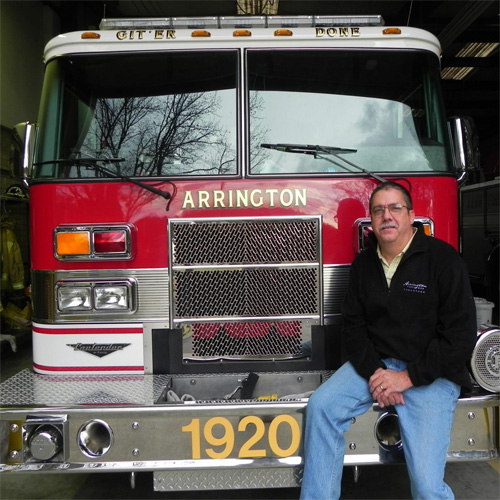 What kind of shape do firefighters need to be in?
Hotel Travel Blog Active 2019
 Can hotels see what I look at when connected to their in-room wifi?
Our office gets journals from the American Academy of Forensic Sciences and the International Association for Identification, as well as smaller publications like newsletters for the Florida Division of the IAI and the one for the association of Bloodstain Pattern Analysts.
Share Answer: 
I think those sound like fabulous courses for this field.
Share Answer: 
I like doing both, because being in the lab all the time can get tedious, but being at crime scenes all the time can get exhausting.
Share Answer: 
-OR-
 Login with Facebook
 (max 20 characters - letters, numbers, and underscores only. Note that your username is private, and you have the option to choose an alias when asking questions or hosting a Q&A.)
(A valid e-mail address is required. Your e-mail will not be shared with anyone.)
(min 5 characters)
By checking this box, you acknowledge that you have read and agree to Jobstr.com’s Terms and Privacy Policy.
-OR-
Register with Facebook(Don't worry: you'll be able to choose an alias when asking questions or hosting a Q&A.)



 Browse Jobs
 Host a Q&A
 Search

 Submit Your Question
 Host a Q&A
 Last 7

