
LIsa Black
Cape Coral, FL
Female, 49


I spent the five happiest years of my life in a morgue. As a forensic scientist in the Cleveland coroner’s office I analyzed gunshot residue on hands and clothing, hairs, fibers, paint, glass, DNA, blood and many other forms of trace evidence, as well as crime scenes. Now I'm a certified latent print examiner and CSI for a police department in Florida. I also write a series of forensic suspense novels, turning the day job into fiction. My books have been translated into six languages.
Yes, the arcsin of the width divided by the length of the stain will give you the angle of impact at which the blood struck the surface (usually a wall). The direction of the stains can be traced back to a point of convergence and from there the angles can be traced back to a distance from the wall, giving you the approximate point in space where the blow was struck.
Share Answer: 

When i go to a party people want to talk to me. That never happened before. Otherwise, it doesn't, except for the obvious scheduling/overtime problems.
Share Answer: 
Whatever you’re scheduled to work—depending on your agency’s setup you might work 8, 10, 12 hour shifts, maybe plus overtime call-outs.
Share Answer: 
No. Much blood will drain from all the cutting done during the autopsy, but no attempt is made to particularly remove it.
Share Answer: 
Oral and Maxillofacial Surgeon
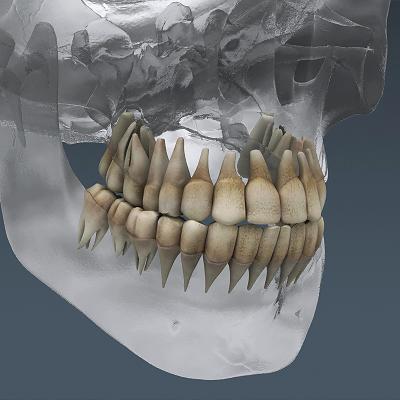 How often do people wake up during surgery?
Day Care Provider
 Do the kids ever reveal embarrassing things about their parents?
Swim Instructor
 What are the physical traits that make for the "ideal swimmer's body"?
Yes, I'll email you when I'm back at work tomorrow.
Share Answer: 
I'm afraid I wouldn't have any idea. Call your local crime labs and ask their personnel for suggestions.
Share Answer: 
It’s not easy to get a job in this field—there’s a lot of competition and staffs are not as large as you might think. The best thing you can do, after graduation if not before, is get an internship somewhere to get some practical experience and meet people. It will also help if you’re willing to relocate.
Share Answer: 
-OR-
 Login with Facebook
 (max 20 characters - letters, numbers, and underscores only. Note that your username is private, and you have the option to choose an alias when asking questions or hosting a Q&A.)
(A valid e-mail address is required. Your e-mail will not be shared with anyone.)
(min 5 characters)
By checking this box, you acknowledge that you have read and agree to Jobstr.com’s Terms and Privacy Policy.
-OR-
Register with Facebook(Don't worry: you'll be able to choose an alias when asking questions or hosting a Q&A.)



 Browse Jobs
 Host a Q&A
 Search

 Submit Your Question
 Host a Q&A
 Last 7

