
LIsa Black
Cape Coral, FL
Female, 49


I spent the five happiest years of my life in a morgue. As a forensic scientist in the Cleveland coroner’s office I analyzed gunshot residue on hands and clothing, hairs, fibers, paint, glass, DNA, blood and many other forms of trace evidence, as well as crime scenes. Now I'm a certified latent print examiner and CSI for a police department in Florida. I also write a series of forensic suspense novels, turning the day job into fiction. My books have been translated into six languages.
School project?Email me at Lisa-black@live.com and I'll send you answers I've accumulated.
Share Answer: 

Why does this sound like a homework question?
Share Answer: 
Yes, all the time. That's part of my job. But that will depend on what your job is, some people work only in the lab, and others work only at crime scenes.
Share Answer: 
Pros: Advanced technology and political attention (i.e., funding)Cons: Reality--evidence isn't always there, the job can be dirty and hard, budgets are always limited
Share Answer: 
Firefighter
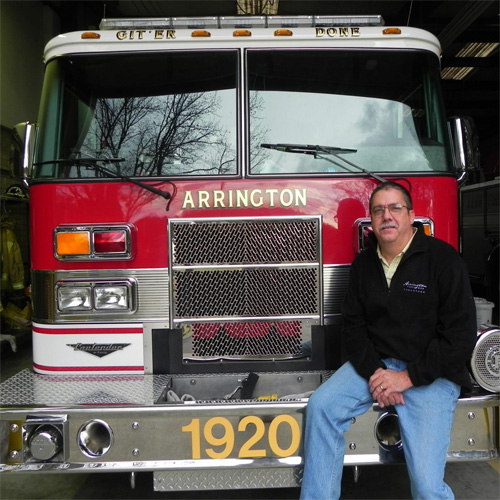 What's the worst you've been burned in a fire?
Magician
 How do you feel about magicians on TV who reveal how tricks are done?
Election Inspector
 Do most poll staffers agree that the ballots are REALLY confusing?
I'm sorry, I thought I answered this one. We work 40 hours per week, some of us are on four 10s and some on rotating 12 hour shifts. Each of us takes a turn on being 'on call' for overtime calls.
Share Answer: 
Usually in forensic science or any kind of natural science. If you want to go to into drug testing or toxicology, major in chemistry. If you want to do DNA analysis, then biology or biochemistry.
Share Answer: 
It's concerning because juries expect more than is reasonable. Not every case is going to have DNA evidence and you don't always find fingerprints on a surface and eyewitness testimony sounds convincing but can be very unreliable. However an expert can hopefully explain all these issues to make the limitations clear, provided the jury listens.
Share Answer: 
-OR-
 Login with Facebook
 (max 20 characters - letters, numbers, and underscores only. Note that your username is private, and you have the option to choose an alias when asking questions or hosting a Q&A.)
(A valid e-mail address is required. Your e-mail will not be shared with anyone.)
(min 5 characters)
By checking this box, you acknowledge that you have read and agree to Jobstr.com’s Terms and Privacy Policy.
-OR-
Register with Facebook(Don't worry: you'll be able to choose an alias when asking questions or hosting a Q&A.)



 Browse Jobs
 Host a Q&A
 Search

 Submit Your Question
 Host a Q&A
 Last 7

