
LIsa Black
Cape Coral, FL
Female, 49


I spent the five happiest years of my life in a morgue. As a forensic scientist in the Cleveland coroner’s office I analyzed gunshot residue on hands and clothing, hairs, fibers, paint, glass, DNA, blood and many other forms of trace evidence, as well as crime scenes. Now I'm a certified latent print examiner and CSI for a police department in Florida. I also write a series of forensic suspense novels, turning the day job into fiction. My books have been translated into six languages.
I'm not sure what you mean by post certified?
Share Answer: 

It means that, like most people, they get tired of people asking them stupid questions.
Share Answer: 
That depends on the kind of forensic evidence.
Share Answer: 
That’s an excellent question, that unfortunately I can’t answer. We have the OBTI test that can confirm blood is human, but beyond that…I don’t know if there are alleles that both animals and humans share that might show up in the average DNA analysis. Even if animals have some alleles that are the same as humans, if those aren’t the alleles looked for in a DNA test, then it wouldn’t affect things. But if they are, then I don’t know if scientists have a way to distinguish them. Sorry I can’t be more help!
Share Answer: 
Hairstylist and Makeup Artist
 What's the grossest hair ailment you ever saw?
Swim Instructor
 Do parents ever get angry at you personally if their kid isn't learning fast enough?
Basketball Referee
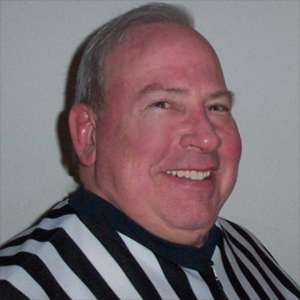 Ever get into a physical altercation with a crazed parent?
Nothing's really 'dumb' since every case involves, a minimum, property loss or inconvenience. Criminals can be dumb...the best example I can think of was when a bunch of boys broke the glass in a door to get into a jewelry store, couldn't find much to take, then were hightailing it out of there as the alarm rang and one was trying to climb back out the broken window and not having much luck when his buddy barreled through the other door simply by pushing the push bar on it. The video was hilarious.
Share Answer: 
Sure, I visited crime labs and the coroner’s office before I got my first forensics job—usually it was just a tour and answering questions though I got to sit in with a police class at the coroner’s and view an autopsy and hear some lectures. Then I would do the same when we had visiting students. Interns are here for a longer period. We usually have them do minor paperwork and tasks and they can observe our work with evidence, fingerprints, scenes, etc so we can explain what we’re doing and why. It’s a great experience. I think you’ll find people in forensics very friendly and helpful. Best of luck to you!
Share Answer: 
I couldn't tell you--I haven't personally done any studies of bystanders at a shooting. GSR analysis is usually testing for primer residue, which can escape from the gun when fired. So someone could have GSR on their hands if they handled a gun, if they touched a surface near to where a gun was fired, if they handled the gun after it was fired, etc. This is why, though they've stated this on television every day for fifty years, having gunshot residue on your hands doesn't prove you fired a gun. Not having gunshot residue on your hands doesn't prove you have not fired a gun. The particles are very tiny and easily dislodged. These are some of the reasons why most agencies don't do gunshot residue analysis any more. Hope that helps!
Share Answer: 
-OR-
 Login with Facebook
 (max 20 characters - letters, numbers, and underscores only. Note that your username is private, and you have the option to choose an alias when asking questions or hosting a Q&A.)
(A valid e-mail address is required. Your e-mail will not be shared with anyone.)
(min 5 characters)
By checking this box, you acknowledge that you have read and agree to Jobstr.com’s Terms and Privacy Policy.
-OR-
Register with Facebook(Don't worry: you'll be able to choose an alias when asking questions or hosting a Q&A.)



 Browse Jobs
 Host a Q&A
 Search

 Submit Your Question
 Host a Q&A
 Last 7

