
LIsa Black
Cape Coral, FL
Female, 49


I spent the five happiest years of my life in a morgue. As a forensic scientist in the Cleveland coroner’s office I analyzed gunshot residue on hands and clothing, hairs, fibers, paint, glass, DNA, blood and many other forms of trace evidence, as well as crime scenes. Now I'm a certified latent print examiner and CSI for a police department in Florida. I also write a series of forensic suspense novels, turning the day job into fiction. My books have been translated into six languages.
Sorry it took me so long to reply! I applied after I got the degree. THat’s kind of odd that they would tell you to apply—does the position require a degree? It couldn’t hurt to contact them for more information and make it clear you won’t have your degree until May and would need to finish your schooling as well. But jobs aren’t easy to come by, so if they’re that interested. In you , you might as well find out more. Best of luck!
Share Answer: 

Some law enforcement agencies still require their forensic staff to be sworn police officers as well, but most have civilian staff for the forensic support. I have always been a civilian and therefore cannot carry a gun.
Share Answer: 
I am an expert in some areas of forensic science. I am not an expert in law, public safety policy or our political system.
Share Answer: 
As far as the job is concerned, I would think the odds of getting the job would be the same, but there are other considerations. The pay and benefits are different (at least at my agency) between sworn and civilian because they’re different unions. A sworn officer would be taking less pay and benefits to be non-sworn so the hiring party might wonder why, or worry that they would get tired of it and want to leave.
Share Answer: 
Toll Collector
 What's the rudest thing a driver ever said to you?
Border Patrol Agent
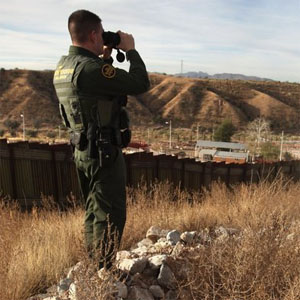 Do Mexican authorities help on THEIR side of the border?
Professional Reseller
 What was your most valuable find in a thrift store?
All of those are good. Take as many science courses as you can. Much depends on where you want to work and what you want to do. If you want to do DNA analysis and testify in court about it, you may need a PhD in genetics. If you want to work at crime scenes bagging and tagging evidence, you may need only a high school diploma, with added hireability for advanced degrees. The only way to know is to check job opening notices or call the agencies and ask. I would also suggest that you look for schools that have hands-on lab work with forensic topics such as fingerprints or crime scene work. Best of luck to you.
Share Answer: 
We don’t have music in the whole department but many of us will listen to it at our desks or on earbuds. I have very eclectic tastes so I have everything from Broadway to ragtime to pop on my phone. But if I’m doing super routine things I’m usually listening to a book or podcast.
Share Answer: 
Sorry, I can't click on unknown links. However, in general terms, I don't react to crime scenes, at least as much as possible. I need to treat each one objectively and consistently, so I'd conduct the same relevant duties as I would at any other crime scene--photo, sketch, collect evidence, etc. And I don't really 'solve' crimes--I provide the forensic support to help the detective solve the crime.
Hope that helps!
Share Answer: 
-OR-
 Login with Facebook
 (max 20 characters - letters, numbers, and underscores only. Note that your username is private, and you have the option to choose an alias when asking questions or hosting a Q&A.)
(A valid e-mail address is required. Your e-mail will not be shared with anyone.)
(min 5 characters)
By checking this box, you acknowledge that you have read and agree to Jobstr.com’s Terms and Privacy Policy.
-OR-
Register with Facebook(Don't worry: you'll be able to choose an alias when asking questions or hosting a Q&A.)



 Browse Jobs
 Host a Q&A
 Search

 Submit Your Question
 Host a Q&A
 Last 7

