Oscar
Charleston, SC
Male, 31
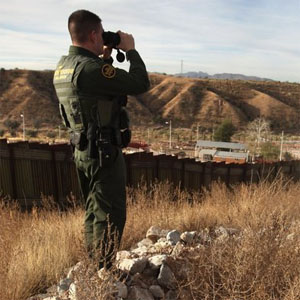
Spent a bit over four years (2006-2010) serving as a Border Patrol Agent in Tucson Sector, AZ: the busiest sector in the country. Worked numerous positions, and spent the last year and a half operating/instructing ground radar installations. Duties included: field patrols, transport, processing, control room duties, transportation check, checkpoint operations, static watch duties, etc.
There is not a dictionary that I am aware of. A candidate must be fluent in English in order to be a BPA. Most of the trainees in my class who failed out of the academy had poor English skills and were unable to pass the classes and law tests. The law classes require excellent English as there is a lot of legal language which is extremely important to comprehend.
Share Answer: 

It would make a transition to ICE much easier, but the FBI is never easy to get into. They recruit very specific people from very specific fields. It can't hurt your chances, but I would not join the BP planning on simply switching over to the FBI. The FBI posts what they're looking for on their website. You'd be better off getting a degree that they're interested in.
Share Answer: 
It's not forbidden...just stupid. A BPA going into Mexico does so at his own risk. Considering you'll be catching and apprehending thousands of illegal Mexicans, it's not exactly the smartest place to go. But there is not a policy against it.
Share Answer: 
I wish I could give you a concise and accurate answer. There are numerous terrorist organizations who have been located in Mexico, dealing or working with the cartels. Simply put the cartels are the masters of infiltrating the U.S., using their expertise.
A week after 9/11 a dozen Chechens were caught coming across the Southern border. Hezbollah militants have been spotted in Mexico. I do believe the cartels know full well this could bring a lot of heat if something horrible can be traced back to them. However, unfortunately, we had a saying in the Patrol "we only catch the dumb ones". It's very simple to catch trucks driving through the desert carrying dope, or catching large groups of illegals walking blatantly across the border.
But small, secret tunnels, small nearly-undetectable ultralight aircraft, etc. are much harder to locate. I suspect any genuine terrorist activity is kept well below our radar. Imagine the funds available to Al Qaeda, Hezbollah etc. I'm sure they can make it financially worthwhile to the cartels to assist them.
I think it deserves some serious attention - and we have intelligence agencies pursuing this exact possibility. I wish I knew more about it to answer more appropriately.
Share Answer: 
CBP Officer
 Do you catch less marijuana at the border now that it's being decriminalized in some States?
Hotel Front Desk Agent
 What's the MOST trashed you've ever found a hotel room?
Hotel Front Desk Agent
Have you ever had a suicide occur in one of your rooms?
This has been answered in the questions above.
Share Answer: 
It does not currently, and I doubt it did previously. If it's an offensive tattoo in an obvious location - possibly. No face tattoos or stupid nonsense on your knuckles/neck/etc.
Share Answer: 
We could do with a lot more Sheriff Joes in this world. He is a dying breed. For someone that people complain about a lot, he's been in office now for what 15-20 years and keeps getting re-elected? He's doing his job (a difficult one at that). The modern world seems to hate people with real work ethic or real opinions/values.
I applaud the guy. He has way too many enemies...that, if anyting, proves he's doing a hell of a job.
Share Answer: 
-OR-
 Login with Facebook
 (max 20 characters - letters, numbers, and underscores only. Note that your username is private, and you have the option to choose an alias when asking questions or hosting a Q&A.)
(A valid e-mail address is required. Your e-mail will not be shared with anyone.)
(min 5 characters)
By checking this box, you acknowledge that you have read and agree to Jobstr.com’s Terms and Privacy Policy.
-OR-
Register with Facebook(Don't worry: you'll be able to choose an alias when asking questions or hosting a Q&A.)



 Browse Jobs
 Host a Q&A
 Search

 Submit Your Question
 Host a Q&A
 Last 7

